What should happen first?
More testing, surgery, medication, another hospital, or expert review? In complex care, the order of decisions can change the entire path.
Cortexia combines trusted medical AI with world-leading specialists and Key Opinion Leaders to help you make sense of complex records, conflicting opinions, and difficult treatment choices. Wherever you live, we help you understand your options, reach the right experts, and find the strongest path forward.
A critical diagnosis can make the world suddenly feel very small. Cortexia opens it back up.

01 / When the next decision matters
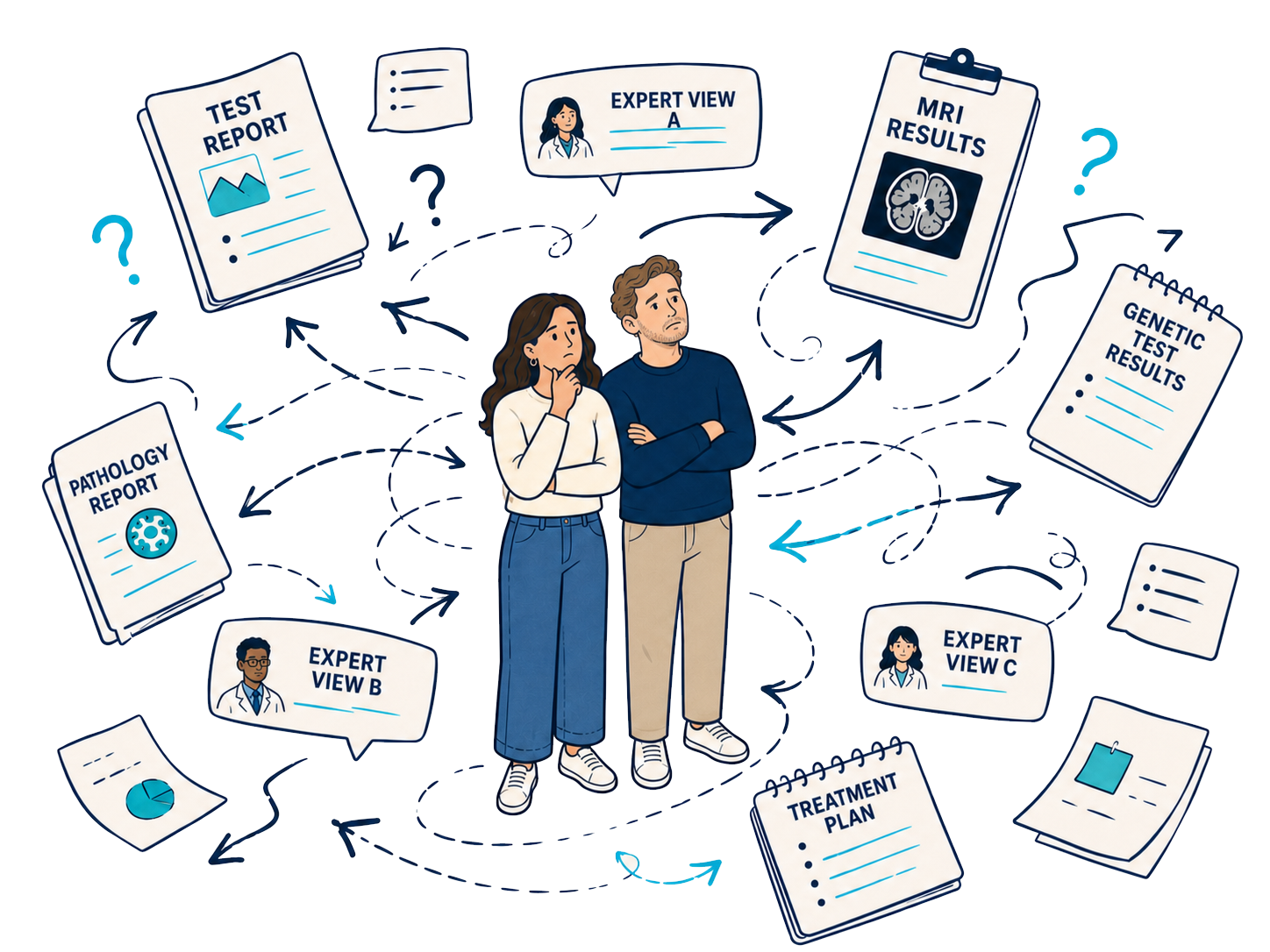
You may already have scans, pathology, test results, and several medical opinions. What you need now is not more information. You need to know what matters, what can wait, and who has the expertise to guide the next decision.
More testing, surgery, medication, another hospital, or expert review? In complex care, the order of decisions can change the entire path.
When doctors disagree, the answer requires deeper expertise, relevant evidence, and a specialist who understands this exact problem at the deepest level.
The right specialist, a clinical trial, an advanced procedure, or a center of excellence may be outside your local health system — or even in another country.
02 / Trusted Medical AI · Organize the story before deciding the answer
Cortexia’s medical AI is designed around real medicine — medical records, clinical guidelines, published evidence, treatment pathways, drug information, and physician expertise. It structures fragmented records, identifies the decision that matters now, surfaces missing information, and prepares the case for expert review. AI does not replace the physician: it gives the physician a clearer starting point, and gives you a way to understand what matters before the next decision is made.
Turn a large medical history into the specific decision that needs to be made next.
Show which options may fit, what each path is trying to achieve, and where the important trade-offs are.
Missing records, tests, imaging, pathology, or unanswered questions are clearly surfaced rather than assumed.
Highlight which new result, specialist review, or piece of evidence could materially change what happens next.
Case shown with personal details removed · Ms. C. · Stage IIIA lung adenocarcinoma · Before physician review
Based on current records, discuss this first
This is a preliminary analysis based on the records available — not a diagnosis or a treatment order. Key questions must be confirmed by the relevant specialists or a multidisciplinary team (MDT).
Start with the records you already have. Cortexia can organize the case, identify what is missing, and show what kind of specialist judgment may matter next — the initial review is free.
Whether to have physicians take a closer look, or to set up ongoing follow-up, is your decision — made after you’ve seen what’s involved and what it costs.
03 / Second Opinion & Virtual MDT · When the decision needs deeper expertise
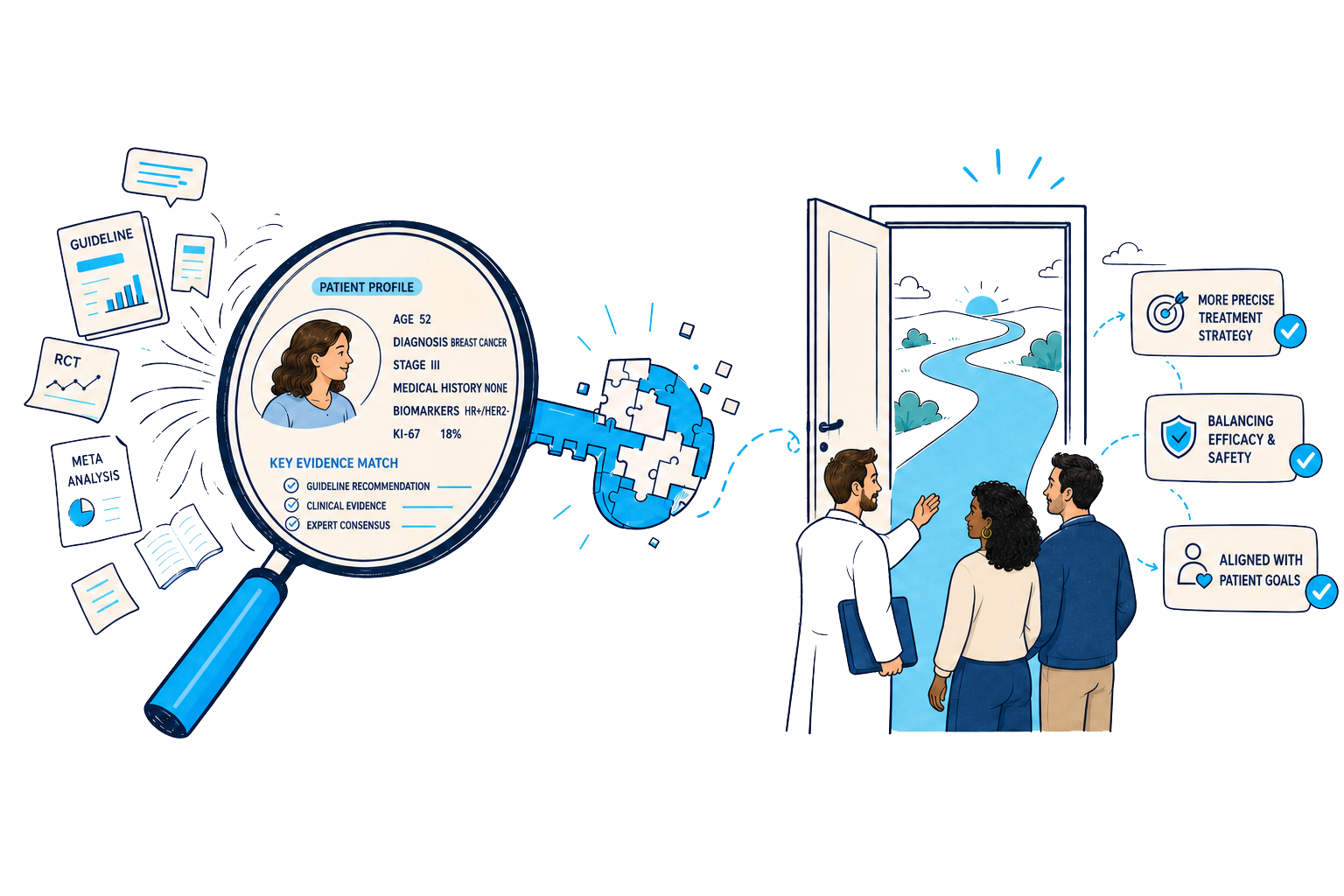
For a defined question, Cortexia can seek the personal judgment of a world-leading specialist. When the case crosses specialties, Cortexia can build a Virtual MDT around the patient — bringing together the right experts to review one organized record and converge on one actionable path. This is not about collecting more opinions. It is about finding the opinion with enough depth, context, and authority to change what happens next.
What the experts are asked to answer
Reviewed against the complete organized record — not a summary of a summary.
The order of decisions, made explicit.
Including options outside your health system or country.
Stated in the opinion itself, not left unsaid.
The same patient · After physicians reviewed the preliminary analysis above
Formal opinion from the physician team
Case shown with personal details removed. Reviewed by the participating specialist(s) or Virtual MDT — with specialty, institution, date, and remaining uncertainties clearly shown.
If one specialist re-examines the case and gives an opinion, that’s a second opinion; if the question spans several specialties that must confer, that’s a multidisciplinary consultation (MDT). Which one is needed depends on the condition.
Physician review is a paid service. The fee depends on how many physicians take part, their seniority, and the turnaround time. Before anything starts, we tell you who will take part, the expected turnaround, and the exact fee — nothing begins until you confirm.

04 / World-Leading Specialist Network
Experts are selected around the exact disease, procedure, therapy, or decision — not simply the broad specialty. The value is not a famous name: it is reaching the physician who understands this exact problem at the deepest level. Field leaders whose work shapes research, trials, and evolving standards of care — by video when travel is unnecessary, in person when being there could materially change the opportunity.
This information is written into the opinion you receive.
After each physician weighs in, the differences and the next steps still have to be spelled out.
We cannot promise treatment outcomes. What we can do: make sure you know who reviewed the records, which specialty they’re from, when the opinion was formed, and which questions remain open.

05 / Longitudinal care · Through treatment, recovery, and change
Cortexia keeps the medical story together as treatment moves forward, so new symptoms, test results, or treatment changes can be understood in context. Your care manager keeps organizing results, medications, and changes in how the patient feels — what to watch this week, who handles it, when the next check-up is. Care managers record, remind, and coordinate; they do not diagnose or adjust treatment.

Case shown with personal details removed · Ms. L. · Stage IIIA lung adenocarcinoma, post-surgery
When something comes up, here is how it’s handled
Record expected progress and routine updates in this week’s file.
Look more closely when symptoms, results, or recovery do not follow the expected course.
Escalate meaningful changes to the appropriate clinician or specialist.
When warning signs suggest immediate local medical attention, the process stops and safety comes first.
Everything already confirmed — the records, the patient’s and family’s wishes, the tasks in progress — is kept. The care manager organizes the new result, asks physicians to re-examine only what’s actually affected, and makes sure the reason for any change is explained.
This time, the treatment order changes
Previous judgment
Surgery still an optionCurrent judgment
Surgery no longer comes firstKept: prior records, the patient’s and family’s wishes, current medications and monitoring. To reconfirm: the treatment order and the next follow-up date.
This is the condition-management service. It can start after physicians have given a treatment recommendation — or earlier, with a care manager organizing and tracking what you have now.
06 / What you should leave knowing
Know the single most important question — no more being pulled around by scattered information.
From: organizing the records and questions
Know what the medical evidence supports — and which information could still change the judgment.
From: the preliminary analysis
Reviewed and signed by the physicians themselves — hospital, specialty, title, and date all visible.
From: second opinion or MDT
Patient and family know what happens today, who handles it, when the next check-up is, and which changes need immediate action.
From: condition management
New tests, symptoms, or opinions are folded in by the care manager, who explains which plans change.
From: condition management
07 / Global Best-Care Search · Care Without Borders
Sometimes bringing the right expert into the case is enough. Sometimes the strongest realistic option is somewhere else — another center, a clinical trial, a newly available therapy. Either way, the case stays whole: records, opinions, and next steps travel together.
Either way, new tests, symptoms, and treatment results keep being recorded. When a physician needs to take a fresh look, the history is right there — no retelling from the start.

08 / Trust & Medical Responsibility · Clear boundaries
Cortexia never lets automated organization stand in for a physician’s judgment. We can organize records, medical evidence, and the questions worth discussing — but a preliminary analysis cannot replace an in-person exam, a review of original imaging, or a prescription. Anything that requires a physician’s judgment is handed to a physician to confirm in person.
We only state what the records actually received can and cannot establish. Missing information is never treated as fact, and we never promise treatment outcomes.
Missing information is identified, never invented; imaging never uploaded is never treated as reviewed.
AI organizes and reasons over the record; it does not replace physician judgment.
By the participating physician or Virtual MDT — no personal review, no opinion shown.
Including what remains open — and what new evidence could change the recommendation.
Local emergency care always comes first — no purchase discussions, no waiting for an online reply.
If there is difficulty breathing, a change in consciousness, persistent chest pain, heavy bleeding, or another potentially life-threatening symptom, go to the nearest emergency department or call your local emergency number immediately. Do not wait for an online reply.
Start here
Tell Cortexia what is happening. Upload the medical records you already have. We will help organize the story, identify the decision, and show what kind of world-leading expertise or global care search may matter next.
The initial review is free. Whether physicians take a closer look is your decision — made after you see who would take part, the turnaround, and the fee.

You can see each step as we read and organize what you submitted.
Before we read your records, U.S. law requires your authorization to use and disclose protected health information (“PHI”). Please review and sign below.
Authorization for Use or Disclosure of Protected Health Information
(Required by the Health Insurance Portability and Accountability Act (“HIPAA”) — 45 CFR Parts 160 and 164)
Date: · Draw your signature above with mouse or touch.
Submit and read the description and selected materials; identify usable content, file status, and sources.
Extract symptoms, diagnoses, tests, treatments, and timing into a chronological summary.
Mark well-sourced items as established; keep conflicts or weak evidence for verification.
Combine this description to clarify what most needs further judgment.
List preliminary takeaways, missing materials, and priorities for the next conversation.
We only organize what you submitted. We do not invent facts, and we do not issue a diagnosis or treatment order.
Your case summary is ready. Continue in the Cortexia app, or view the organized result on this page.
The partner program is not open yet. Stay tuned.
If you’d like to hear from us when it opens, write to hello@cortexiahealth.com.
Sign in or create an account to keep your case summaries and pick up where you left off.